Lieutenant General Jubal Anderson Early
Commander- 2nd Corps
Army of Northern Virginia
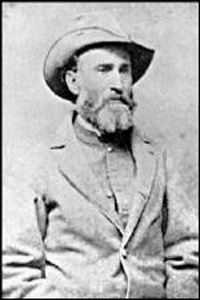 Jubal Anderson Early was born in Franklin
County, Virginia, on November 3, 1816, to Joab and Ruth Early. He
graduated from West Point in 1837. His first taste of military life
was in the Seminole War, coming to Tampa then making his way to Ft.
Taylor, in what is now Osceola County. After resigning his
commission, he studied law and began practicing in Rocky Mount,
Virginia. He became a member of the House of Delegates and served as
the prosecuting attorney for Franklin and Floyd Counties. Early
rejoined the military to serve in the Mexican War. It was here Early
met a Mississippi Colonel named Jefferson Davis, beginning a
lifelong friendship between the two men. It was,
also, here that he contracted a cold and fever that developed into a
painful chronic arthritis that would stay with him the rest of his
life.
Jubal Anderson Early was born in Franklin
County, Virginia, on November 3, 1816, to Joab and Ruth Early. He
graduated from West Point in 1837. His first taste of military life
was in the Seminole War, coming to Tampa then making his way to Ft.
Taylor, in what is now Osceola County. After resigning his
commission, he studied law and began practicing in Rocky Mount,
Virginia. He became a member of the House of Delegates and served as
the prosecuting attorney for Franklin and Floyd Counties. Early
rejoined the military to serve in the Mexican War. It was here Early
met a Mississippi Colonel named Jefferson Davis, beginning a
lifelong friendship between the two men. It was,
also, here that he contracted a cold and fever that developed into a
painful chronic arthritis that would stay with him the rest of his
life.
Early, as a member of the Virginia secession
convention in April 1861, voted against secession. Yet, when
Virginia seceded, Early promptly entered the Confederate Army as a
Colonel of the 24th Virginia Infantry; which he led at the Battle of
First Manassas. From the beginning of the war Early was noted for
his bravery and leadership. At the Battle of Williamsburg, he was
wounded while out in front of his troops leading a charge against
overwhelming odds. He returned to Rocky Mount to recover but within
two months he was back in action. He was so scrappy, it was said he
would fight anything at anytime. He was promoted to brigadier
general on July 21, 1861. He took part in all of the engagements of
the Army of Northern Virginia from 1862 through 1864. He was
promoted to major general on January 17, 1863. He was a prominent
leader at Salem Church and in the Gettysburg campaign. At the
Wilderness, he commanded A.P. Hill’s Corps for a time and was
promoted to Lieutenant General on May 31, 1864.
After the temporary retirement of General Ewell
from field duty, Early was given command of the 2nd Corps. Following
Cold Harbor, General Lee ordered Early to lead his troops in the
Shenandoah Valley. Lee wanted Early to “threaten” Washington to
divert Grant’s attention and resources away from Lee, in Richmond
and Petersburg. Early defended Lynchburg and drove Union General
David Hunter westward into the mountains, defeated General Wallace
at Monocacy (Maryland), and was at the gates of Washington D.C., on
July 11, 1864. Early took his men closer to
Washington than any Confederate commander during the war.
Early contemplated an attack on Washington
D.C., but due to attrition, exhaustion, and lack of supplies, he
never entered Washington, but he “scared the hell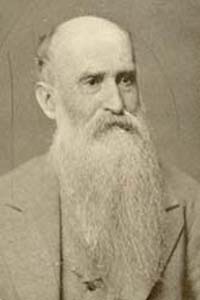 out of Lincoln”.
Early also felt it was time that the citizens of the North realized
what their “heroes” were doing to the people of the South. His
cavalry, because of the atrocities committed against civilians by
Union General Hunter, burned the town of Chambersburg, Pennsylvania,
after the townsfolk refused to raise the money requested by Early
(which would have been used to help those affected by Hunter). The
arrival of both the 6th Corps and the 19th Corps, of the Army of the
Potomac, from Petersburg forced Early to fall back into Virginia;
but he struck back across the Potomac later that same month.
Although he didn’t “take” Washington D.C., Early’s Valley Campaign
served it’s purpose. His force of only 14,000 at it’s peak, tied up
40- 60,000 Union troops sent to save Washington.
out of Lincoln”.
Early also felt it was time that the citizens of the North realized
what their “heroes” were doing to the people of the South. His
cavalry, because of the atrocities committed against civilians by
Union General Hunter, burned the town of Chambersburg, Pennsylvania,
after the townsfolk refused to raise the money requested by Early
(which would have been used to help those affected by Hunter). The
arrival of both the 6th Corps and the 19th Corps, of the Army of the
Potomac, from Petersburg forced Early to fall back into Virginia;
but he struck back across the Potomac later that same month.
Although he didn’t “take” Washington D.C., Early’s Valley Campaign
served it’s purpose. His force of only 14,000 at it’s peak, tied up
40- 60,000 Union troops sent to save Washington.
September 1864, brought defeats to Early by
General Sheridan at, both, Winchester and Fisher’s Hill. A last
surprise attack on Sheridan at Cedar Creek was repelled. The
remnants of Early’s command were defeated, by General Custer, at
Waynesboro in March 1865. After Lee’s surrender at Appomattox, with
Federal troops scouring Franklin County trying to find him, Early
went into voluntary exile. He made his way to Mexico and then to
Canada. He was pardoned by President Andrew Johnson in 1868, having
never surrendered or taking the oath of allegiance. Later, he
returned to Lynchburg, Virginia, to resume his law practice. He
became the first president of the Southern Historical Society,
became the preeminent authority of Confederate history, and wrote
his memoirs. The latter part of his life was spent supervising the
drawings of the Louisiana Lottery, successfully destroying the
reputation of General Longstreet, and defending the great reputation
of General Robert E. Lee.
Known for his short temper and his talent for
profane words, Early earned the nickname of Lee’s “Bad Old Man”.
While not always liking Early, his soldiers respected him and
nicknamed him “Old Jubilee” and “Old Jube”. Early had 4 children
with a lady from Pittsylvania, Virginia, named Julia McNealy.
Although he never married Julia, Early continued to support
his children. Early died March 2, 1894, “Unreconstructed” to the
end, and was buried at Spring Hill Cemetery in Lynchburg, Virginia